VIVAERO
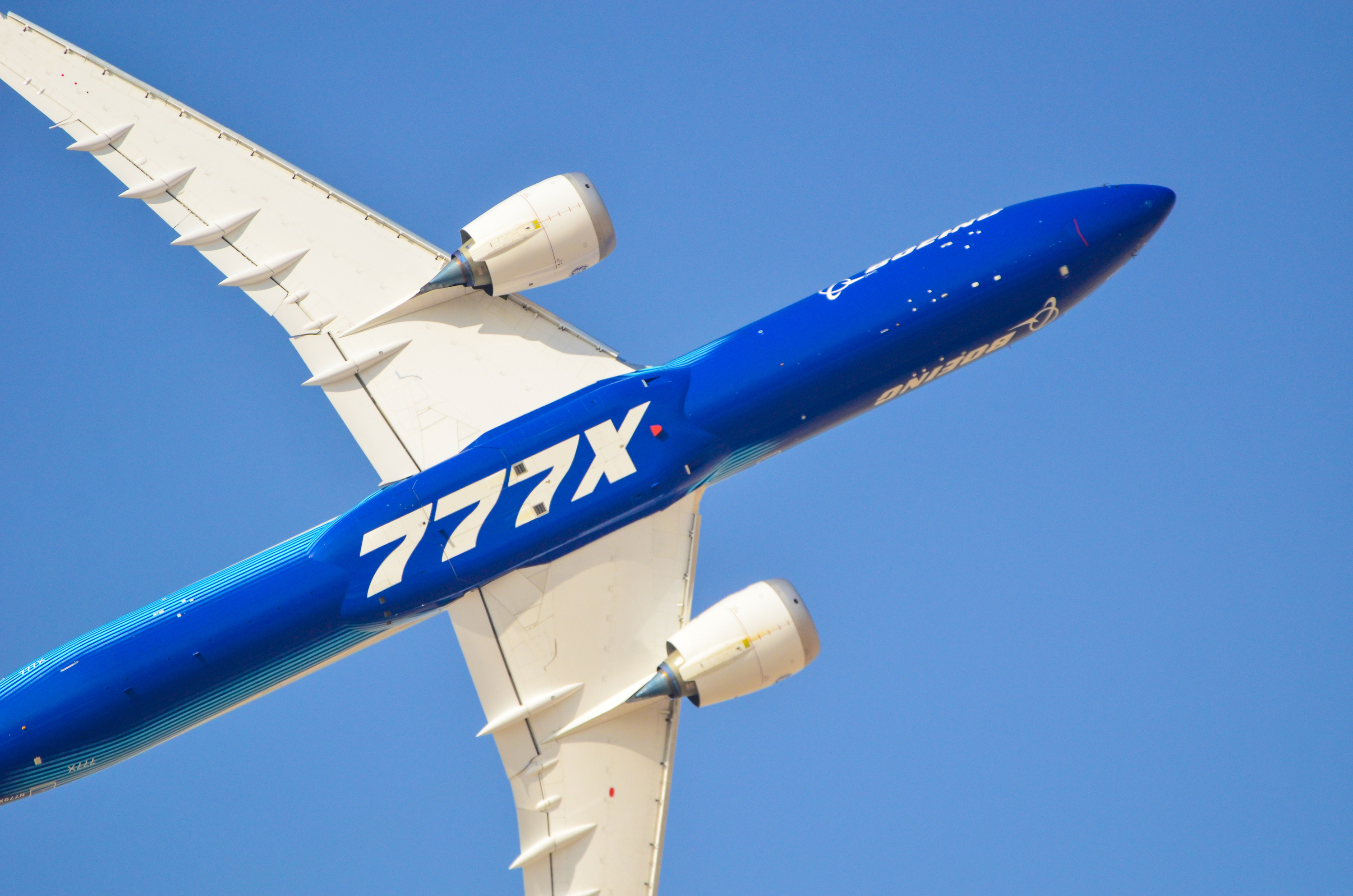
GE Aerospace: Boeing 777X GE9X engine designed from the start with the Middle East in mind
The aircraft engine manufacturer GE Aerospace reported that this year's Dubai Airshow featured the Boeing 777X, Boeing's new aircraft equipped with the GE9X, the world's most powerful commercial jet engine. The public admired the engine's power, which reached 134,300 pounds of thrust during flight demonstrations of one of the 777-9 prototypes.
But the manufacturer highlighted that Dubai is also an ideal location to discuss how the engine's design prioritized durability in hot and challenging environments, made possible by the use of advanced GE Aerospace technologies.
The engine was designed from the outset with the Middle East in mind, explains Cristina Seda-Hoelle, head of the GE9X engine program at GE Aerospace. "Dubai is really important to this program, as two-thirds of aircraft and engine sales have been to Middle Eastern customers," she says. To date, there are more than 550 orders for the 777X from 14 airlines. “We are using our time [before entry into service (EIS)] wisely,” adds Seda-Hoelle, “continuing to test and iterate the design to ensure that when we launch this engine, it is as mature as possible for our customers.”
The GE9X is already the most tested engine in GE Aerospace history. Seda-Hoelle notes that the company has applied cutting-edge technologies with a “test early, test often” philosophy. This has allowed engineers to identify potential engine problems very early in the development cycle, make improvements, and validate the engine’s durability, efficiency, and performance in conditions that simulate real-world environments.
For example, engineers are currently conducting a second round of dust ingestion tests. “In the past, we would do this type of test five or six years after EIS,” says Seda-Hoelle. During testing, engineers are refining GE Aerospace’s proprietary testing and validation system, allowing them to “turn on” the unique dusty conditions of the Middle East and then “turn them off.”
The team at GE Aerospace’s Middle East Technology Center (MTC) also played a key role in the design and testing of the GE9X. Their work included a multi-year project to collect dust samples from various locations in the Gulf region, which helped GE Aerospace develop a proprietary dust that mimics the particles present in the region’s atmosphere. This provided valuable insights into how dust accumulates within engine components and impacts durability.
The goal of all this research and testing, according to Carlos Perez, vice president of commercial engine systems engineering at GE Aerospace, is to improve engine durability for customers, particularly in the Middle East.
To that end, the engine will also have an elite support team in Dubai. GE Aerospace has just announced a new $50 million On Wing Support (OWS) facility in Dubai South, a logistics hub near Dubai World Central Airport. “One of our priorities is to provide a world-class service experience for our customers,” says Seda-Hoelle.
The new facility is four times larger than GE Aerospace’s current OWS facility in Dubai South. It will support the development of advanced technology for the GE9X and the CFM LEAP, the narrowbody aircraft engine developed by CFM International, a joint venture between GE Aerospace and Safran Aircraft Engines, which entered service in 2016. The site will also include MRO training facilities to enhance the capabilities of the local team and support customer training initiatives.
Based on the Experience of Giants...The GE9X engine is based on the robust and proven architecture of the iconic GE90, the world's first engine to use carbon fiber composite fan blades instead of metal, allowing for weight savings and larger blades to improve the bypass ratio. From this solid foundation, engineers have incorporated "the latest and greatest technologies and innovations that provide durable products for our customers," says Seda-Hoelle.
Many of these technologies were initially employed in other GE Aerospace engine families, such as the GEnx and LEAP. The GE9X engine now features more components made from next-generation materials called ceramic matrix composites (CMCs), which can withstand much higher temperatures than most metals. “In the LEAP, it was just the casing [made of CMCs], so we’re making big advances,” says Seda-Hoelle.
GE Aerospace also used data-driven analyses from MTC in the design of the dust separation technology in the GE9X engine’s center combustor, which improves engine durability by keeping the cooling air clean.
Details…GE Aerospace has made meticulous preparations for the ongoing dust tests. Consider, for example, the proprietary dust it shoots into the GE9X engine during testing. “We need to understand the unique chemistry and geology [of the dust] and understand the basic physics that’s happening in the engine parts,” says Perez. “It’s probably the most expensive dust you’ve ever seen.”
The sophisticated “on-off” dust testing system provides valuable scientific control and has generated continuous, evidence-based improvements. “Every time we run one of these tests, we learn something,” says Perez. “The things we look for are small in some respects, but they make a huge difference.” Engineers will also be able to apply these insights to the company’s other jet engine families.
But learning works both ways. Perez cited a recent design update to a turbine rotor blade on the GEnx engine, which entered service in 2011 on the Boeing 747-8 freighter, and soon after on the 787 Dreamliner. He explained how engineers used unparalleled flight experience, advanced aerodynamic analysis, and a robust test validation process to identify and correct the problem. It took 15 years of research and work, and ultimately, “the design change involved something like two or three widths of a human hair,” he says, but resulted in a significant improvement in durability.
“These are small changes with big, big results,” says Perez, noting that the design update more than doubled the turbine blade life of the GEnx engine in the Middle East region. These durability improvements will be introduced in the GE9X and other engine families.
“We are leveraging field experience from narrowbody and widebody applications, with over 2.3 billion flight hours to test and validate our products,” Perez emphasizes.
GE Aerospace will strengthen its analytical capabilities for the GE9X engine by implementing AI-enabled blade inspection tools, which can cut inspection times in half for operators while improving inspection accuracy.
The various technologies are identifying and eliminating GE9X engine defects even as production enters an accelerated expansion phase. “The critical point isn’t whether you can launch a technology,” explains Perez. “It’s whether you can validate it and ensure it actually works where our customers need it.”
Innovation in durability is a customer-driven mission, explains Russell Stokes, president and CEO of GE Aerospace's commercial engines and services unit. “We are ensuring we have the capacity needed to serve our customers and keep their fleets flying,” he says. “Ensuring on-time departures, managing unscheduled removals, and fulfilling the durability commitment that is linked to the launch of this product.”
Stokes adds: “We will continue to measure success by how our customers perceive, feel, and value it.”
Information from GE Aerospace


Comments
Post a Comment