CESSNA
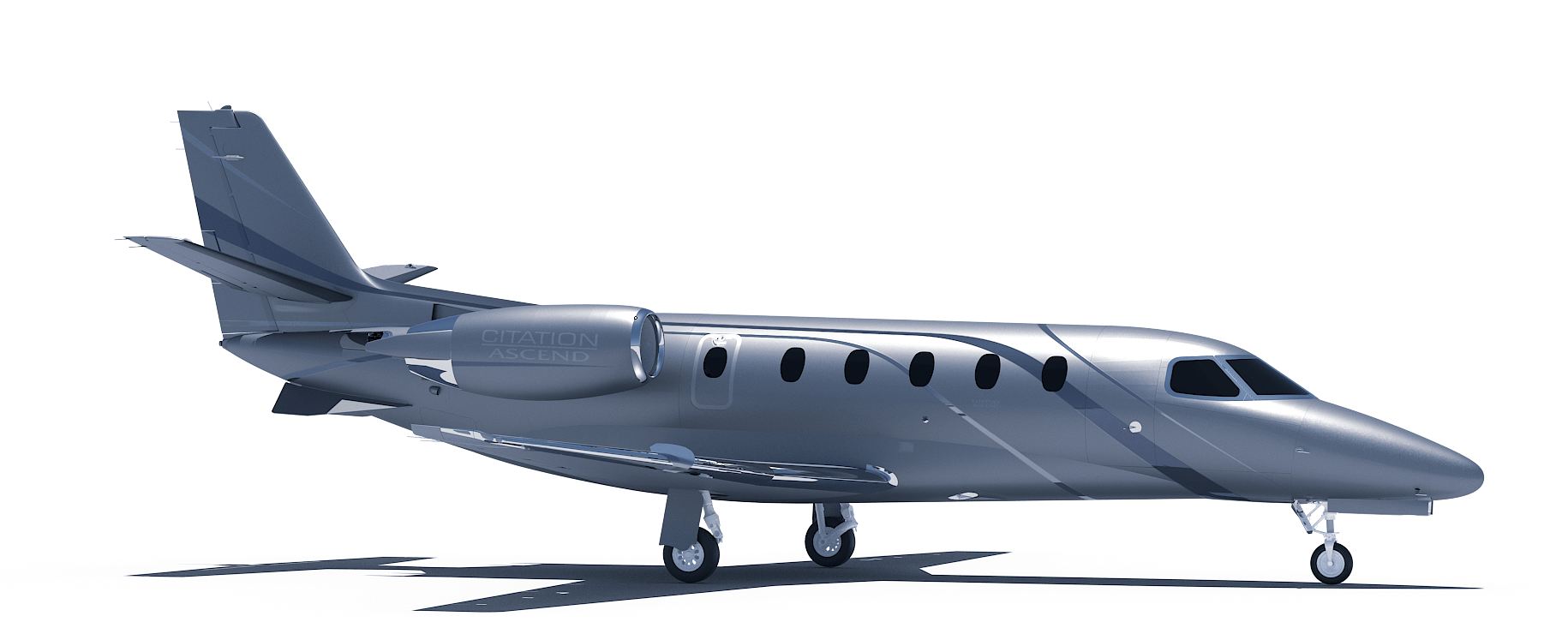
Cessna Citation Ascend: Autothrottle, Garmin G5000, and redesigned cabin to renew the 560XL family
The Cessna Citation Ascend arrives on the market as a profound update to the acclaimed 560XL family, combining new engines, a Garmin G5000 suite, autothrottle, and cabin and maintenance changes that seek to increase efficiency, reduce workload, and preserve the operational flexibility that has made the XL/XLS/XLS+ a benchmark among midsize jets.
The project, revealed in 2023 at EBACE, aimed to thoroughly update avionics and cabin details, allowing the aircraft to be positioned more competitively in the hotly contested midsize jet market. Two years later, in October 2025, the Cessna Citation Ascend made its public debut during NBAA-BACE in Las Vegas.
Maintaining Cessna's philosophy of improving consolidated and established designs, while upholding the operational logic that consolidated the XL/XLS/XLS+ among corporate, fractional, and air taxi operators, the improvements were specific, yet significant.
The Ascend's architecture builds on the knowledge accumulated in the 560XL, but revises structural and system points to expand usable capacity, operating ranges, and maintenance standardization.
The goal was to reduce pilot workload during cruise and takeoff and go-around regimes, while maintaining adequate thrust reserves on short runways and during hot/high-pressure operations, as well as improving fuel efficiency.
According to the official technical specifications, the MTOW (Maximum Towing Weight) is 9,300 kg, the direct climb time to FL450 is 30 minutes, and the maximum cruise speed reaches 441 ktas. The takeoff distance at MTOW is 1,115 meters, a value consistent with the 560XL's vocation for regional airports—and the reference range is 1,900 nm (four passengers in fast cruise), with an announced nominal range of up to 2,100 nm for high-efficiency profiles.
From a space perspective, the cabin length is 5.64 meters, the width is 1.68 meters, and the height is 1.52 meters in the flat floor configuration. According to official brochure data, the basic operating weight is 5,946 kilograms and the payload with full tanks is 386 kg. The systems section includes the Honeywell RE100 [XL] APU with unattended operation capability, useful for maintaining thermal comfort on the ground with lower fuel consumption and noise.

The cabin has been redesigned to meet recurring requests from 560XL operators. The flat floor (with the option to keep the aisle lowered at no additional cost) improves ergonomics and circulation, while the windows have been enlarged by approximately 15%, improving the entry of natural light.
On the flight deck, the most visible transition is the adoption of the Garmin G5000, in a configuration of three 14-inch screens and touch controllers, with Synthetic Vision integration and ground and route guidance features. In addition to autothrottle, the suite includes weather detection packages, including radar, ADS-B In/Out, and enhanced situational awareness during taxiing with 3D visualization of the environment, especially useful in complex aprons, airports unfamiliar to pilots, and low-visibility conditions. The goal is to bring the operational experience of the Citation Latitude and Longitude closer together, creating commonality in training and operating philosophy among mixed fleets.

The standard layout provides for nine seats, but can accommodate a maximum of twelve, with new rails and electric controls for turning and translation, as well as USB outlets distributed in 19 points and induction chargers, a system that is becoming increasingly common in mobile devices. The aim is to preserve the mission versatility typical of the 560XL — short corporate flights, point-to-point charters and regional connections — adding comfort and connectivity similar to that observed in larger Cessna models.
On routes where ground time and availability weigh as much as cruise minutes, the sum of extended maintenance intervals, proactive diagnostics, and unattended APU tends to be in its favor.
In short, the Citation Ascend does not seek to revise the concept of the 560XL, but to update it for the next decade: new engines and autothrottle; Garmin G5000 and situational awareness packages on the flight deck; Flat floor, enlarged windows, and full cabin connectivity; and a performance envelope that maintains the DNA of a midsize jet prepared for medium-haul routes and short runways.
The jet adopts the new generation of the Pratt & Whitney Canada PW545D engine, equipped with FADEC and compressor and turbine improvements that, together with a redesigned exhaust mixer, increase efficiency and allow for standard autothrottle integration.

In terms of market positioning, the Ascend updates Cessna's most popular mid-size aircraft without altering its essence: access to short runways, competitive payloads, and a contained cost per hour, now with autothrottle, a modernized cabin, and a fully integrated G5000.
Maintenance Package...Another current differentiator is the maintenance package that seeks to reduce downtime and direct costs: 18-month or 800-hour airframe intervals, in addition to telemetry and in-flight diagnostics via LinxUs Air and AReS recorder monitoring thousands of parameters per cycle.
In practical terms, the idea is to anticipate failures, shorten troubleshooting times, and favor condition-based maintenance decisions, keeping the aircraft available for high-utilization operations, especially air taxi services. The logic of commonality also appears in finishing and electrical items (LEDs throughout the aircraft, work light on the baggage compartment pylon, and single-point refueling), items that simplify ramp routines and inspections at remote bases.
In terms of mission, the combination of a maximum cruise speed of 441 ktas, direct climb to FL450, and a realistic range of 1,900 nm covers most regional city pairs and shorter-distance transcontinental connections—including in Brazil—with room for alternates and margins for weather issues.
For operators who value operational familiarity and predictable cost, the technical upgrade to the Ascend represents the natural evolution of the XL/XLS — now with tools that reduce workload, increase availability, and preserve the versatility that has made the 560XL one of the most popular business jets on the market.
by Vivaero


Comments
Post a Comment